Tuesday, July 27, 2010

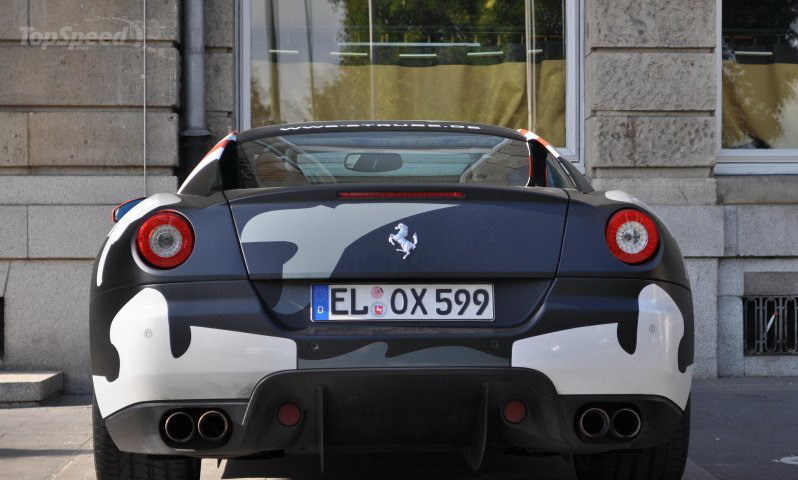
Ferrari 599 GTB HY-KERS Concept

Ferrari 599 GTB HY-KERS ConceptFerrari 599 GTB HY-KERS Concept

Ferrari 599 GTB HY-KERS ConceptFerrari 599 GTB HY-KERS Concept

Ferrari 599 GTB HY-KERS ConceptFerrari 599 GTB HY-KERS Concept
Cockpit room and luggage space are also unaffected. Not only does this layout not affect dynamic performance, it actually improves it, by lowering the centre of gravity. This is thanks to positioning the batteries below the floorpan of the car, and the use of a compact electric motor coupled to the rear of the F1 dual-clutch gearbox.

Firstly, weight distribution has not been altered. There are many original aspects to the new Ferrari hybrid transmission, starting with its architecture. City driving is traditionally where sports cars are most penalised as their engines are designed for maximum efficiency and performance at high revs, whereas the urban cycle involves low revs and low engine loads. One of the principle objectives of the project is ensuring that Ferrari will be in a position to comply with future CO2 emissions standards, particularly in terms of the urban cycle.

Thanks to ongoing research combined with experience gained in Formula 1, the new technology developed at Maranello actually accentuates the cars' sporty character and driving involvement. The HY-KERS is based on the 599 GTB Fiorano but importantly, the technology may one day be fitted to all future Ferraris, 8- and 12-cylinders alike, regardless of their engine position. Ferrari at the 2010 Geneva Motor Show gives the public its first glimpse of the HY-KERS vettura laboratorio which can reduce CO2 emissions by 35 per cent on the combined cycle (ECE + EUDC).

Ferrari P540 Superfast Aperta Pictures

Ferrari P540 Superfast Aperta PicturesFerrari P540 Superfast Aperta Pictures

Ferrari P540 Superfast Aperta PicturesFerrari P540 Superfast Aperta Pictures

Ferrari P540 Superfast Aperta PicturesFerrari P540 Superfast Aperta Pictures
"I had always dreamed of designing sports cars," Walson explains, "and when I saw this film the decision came of its own accord: one day I would have 'my' Ferrari." The Ferrari P540 Superfast Aperta's proud new owner, Edward Walson, son of John Walson, the inventor of cable TV, approached Ferrari in 2008 to produce a modern reinterpretation of the gold-coloured car in the film. The car, the second in a new Special Projects programme created by Ferrari to meet requests from the most discerning clients and collectors to create truly unique models, is based on the Ferrari 599 GTB Fiorano and was inspired by a Carrozzeria Fantuzzi-designed Ferrari built specifically for the 1968 Fellini film, Toby Dammit, itself inspired by one of the tales of Edgar Allan Poe. The first shake-down has been held at Fiorano of a very special one-off, the Ferrari P540 Superfast Aperta, built for an American client.

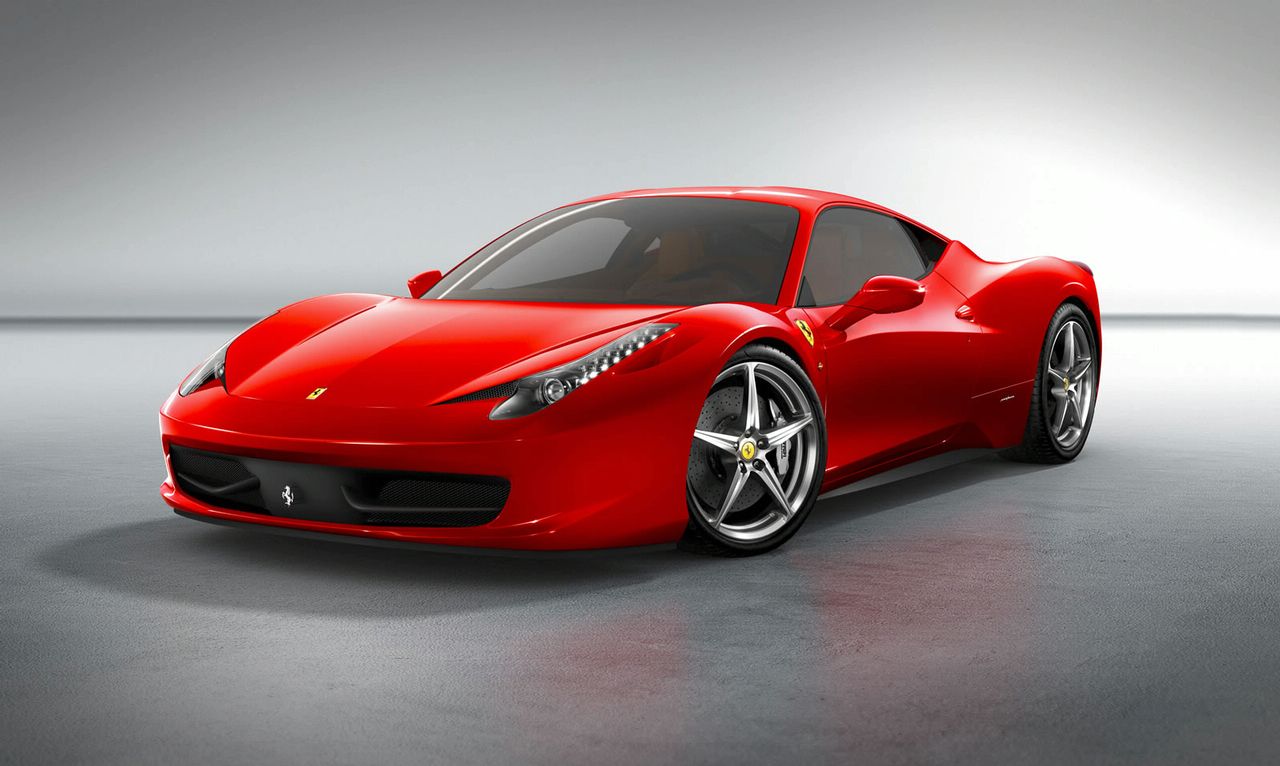
Ferrari 458 Italia

Ferrari 458 Italia Ferrari 458 Italia

Ferrari 458 Italia Ferrari 458 Italia

Ferrari 458 Italia Ferrari 458 Italia
However, what is truly extraordinary is the amount of torque available while still maintaining high levels Specific torque is a record 120 Nm/litre. Maximum torque is 540 Nm at 6000 rpm, over 80 per cent of which is available from 3250 rpm. Equipped with the traditional flat-plane crankshaft, the engine delivers 570 CV at 9000 rpm and, with an outstanding power output of 127 CV/litre, sets a new benchmark not only for the whole Ferrari range and the history of company, but also for the entire market segment.

It has a very low piston compression height typical of racing engines which contributed to achieving its compression ratio of 12.5:1. The new 4499 cc V8 is the first Ferrari direct injection engine to be mid-rear mounted. The nose also sports small aeroelastic winglets which generate downforce and, as speed rises, deform to reduce the section of the radiator inlets and cut drag. The front features a single opening for the front grille and side air intakes, with aerodynamic sections and profiles designed to direct air to the coolant radiators and the new flat underbody.

As with every Ferrari, the car's styling has been very heavily influenced by the requirements for aerodynamic efficiency, as can be seen from the downforce of 140 kg at 200km/h generated by the new model. The Ferrari 458 Italia has a compact, aerodynamic shape, underscoring the concepts of simplicity, efficiency and lightness that inspired the project. The Ferrari 458 Italia's Pininfarina design provides further evidence of the complete departure from the past that this new car hails.

Ferrari 599 GTO Image

Ferrari 599 GTO ImageFerrari 599 GTO Image

Ferrari 599 GTO ImageFerrari 599 GTO Image

Ferrari 599 GTO ImageFerrari 599 GTO Image
VEHICLE DYNAMICS One of the most significant innovations on the Ferrari 599 GTO is the close correlation between the chassis set-up, which is close to the handling limit, and the input from the electronic controls which are developed to increase overall levels of performance. The Ferrari 599 GTO features the same, lower 60 ms shift times and the possibility to make multiple downshifts as on the 599XX. The engine sound inside the car is carefully controlled to balance the intake sound with the exhaust, which features a 599XX-derived 6-into-1 manifold. This is how the engineers managed to achieve maximum performance at high engine speeds.

To maximise volumetric efficiency per cylinder, a connection between the two plenums at the front compensates for variations in the volume. The car also has a racing-type intake system with a new manifold with diffuser-type intake geometry and short inlet tracts designed to improve power delivery at high revs and reduce losses. This result was obtained by working on the fluid-dynamics and components to reduce internal friction and by adopting, amongst other things, the 599XX's redesigned crankshaft. The 5999 cc 65-degree V12 engine punches out 670 CV at 8250 rpm with maximum torque of 620 Nm at 6500 rpm and there is a smooth, constant rush of power all the way to the redline with no loss of flexibility even at medium and low revs.

It thus complies with Euro 5 and LEV 2 standards. The Ferrari 599 GTO's engine is directly derived from the 599XX unit implementing, however, the necessary modifications for road-going homologation.

Sunday, July 25, 2010

Mercedes-Benz SLS AMG GT3

Mercedes-Benz SLS AMG GT3Mercedes-Benz SLS AMG GT3

Mercedes-Benz SLS AMG GT3Mercedes-Benz SLS AMG GT3

Mercedes-Benz SLS AMG GT3Mercedes-Benz SLS AMG GT3

The solution - installing the eight-cylinder as low as possible and as a front mid engine behind the front axle, combined with a transaxle transmission layout - results in excellent weight distribution. Dry sump lubrication also facilitates a low mounting position for the V8 power unit - one of the key technological highlights of the Mercedes-Benz SLS AMG. This technology ensures reliable lubrication of the engine under high lateral acceleration, of the kind usually experienced on the race track. The application of a suction and pressure pump, as well as an external oil tank means that the conventional oil sump can be omitted.

The AMG 6.3 liter V8 engine uses dry sump lubrication in the racing vehicle, too. Depending on gear ratio, the top speed is more than 186 mph. Thanks to its low weight, the acceleration figures for the GT3 - 3.7 seconds for the sprint from 0 to 60 mph - are considerably below the already excellent figures for the series production vehicle. As defined in the FIA GT3 regulations, the AMG 6.3 liter V8 engine is virtually identical to that of the series production vehicle.

Mercedes-Benz SLS AMG US Version

Mercedes-Benz SLS AMG US VersionMercedes-Benz SLS AMG US Version

Mercedes-Benz SLS AMG US VersionMercedes-Benz SLS AMG US Version

Mercedes-Benz SLS AMG US VersionMercedes-Benz SLS AMG US Version

Mercedes-Benz SLS AMG US VersionMercedes-Benz SLS AMG US Version
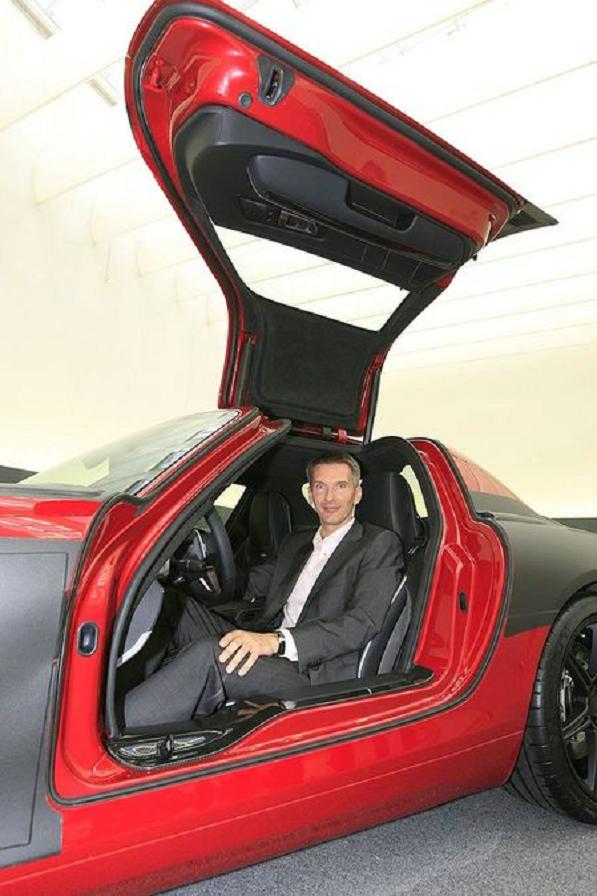
Dieter Zetsche, Chairman of the The SLS AMG bolsters both the Mercedes-Benz and AMG brands equally, and will surely become one of the most alluring sports cars of all time," says Dr. "With the new Mercedes-Benz SLS AMG, Mercedes-Benz is presenting a fascinating super sports car that will quicken the pulse of any car fan. The Gullwing model accelerates from 0 to 60 mph in 3.8 seconds and has a top speed of 196 mph (electronically limited).

The car's ideal weight distribution between the front and rear axles (47 to 53 percent respectively) and its low center of gravity emphasize the outstanding sports car concept. It's a combination that guarantees supreme handling dynamics. The new super sports car from Mercedes-Benz and AMG dazzles with its unparalleled technology package: an aluminum space-frame bodyshell with gullwing doors; an AMG 6.3-liter, front-mid V8 engine with a top power of 563 hp, 479 lb-ft of torque, and dry sump lubrication; seven-speed dual-clutch in a transaxle configuration; a sports chassis with aluminum double-wishbone suspension; and a DIN curb weight of 3,573 pounds. At the same time, the SLS delivers the everyday utility and exemplary safety that typifies Mercedes, making the new Gullwing model the ideal synthesis of the strengths of Mercedes-Benz and AMG.

The super sports car boasts a purist design, the systematic incorporation of lightweight engineering and superior handling dynamics. Automotive fascination and high tech of the highest order: These are the traits embodied by the new Mercedes-Benz SLS AMG, which made its world premiere at the 2009 International Motor Show (IAA) in Frankfurt/Main.

Saturday, July 24, 2010

Hyundai Sonata Hybrid

Hyundai Sonata HybridHyundai Sonata Hybrid

Hyundai Sonata HybridHyundai Sonata Hybrid

Hyundai Sonata HybridHyundai Sonata Hybrid
Hyundai Hybrid Blue Drive also is unique in its use of the company's own highly efficient, compact new 6-speed transmission, modified with hybrid starter-generator, electric motor, and low-friction oil pump, which together allow the elimination of the traditional torque converter. Lithium polymer offers the benefits of lithium-ion, a technology used in laptops and cell phones, but adds robustness, power-density and package flexibility, making it ideal for automotive applications. Hyundai Hybrid Blue Drive is the first and only system using lithium polymer battery technology - leapfrogging competitive in-market nickel-metal hydride and lithium-ion applications. Hyundai's proprietary full parallel architecture differs from the power split technology used by most competitors, allowing significant efficiency advantages at higher speeds.

"Its full parallel hybrid configuration and breakthough lithium polymer batteries offer a new take on traditional hybrid design, while its unique design sets it apart from the mid-size hybrid pack." The Hyundai-developed Hybrid Blue Drive architecture is a full parallel hybrid drive system, which can operate on an electric motor, gasoline internal combustion engine, and a combination of the two depending on driving conditions and driver demands. "The Hyundai Sonata Hybrid is the new kid on the block, but it's not a follower," says John Krafcik, president and CEO, Hyundai Motor America. market. The Sonata Hybrid is Hyundai's first hybrid in the U.S. At the 2010 New York auto show, Hyundai unveiled its 2011 Sonata Hybrid, changing the game in hybrids with unique approaches in hybrid powertrain design, battery technology and vehicle appearance.

Hyundai Verna

Hyundai VernaHyundai Verna

Hyundai VernaHyundai Verna

Hyundai VernaHyundai Verna
We are not losing any momentum, continuing to expand our lineup in China with our most stylish and advanced models like the all-new Verna and our compact SUV - ix35." "In 2009 we posted a 94 percent Y-o-Y growth in China and have sold over 2 million cars since arriving in 2002. "Today is a really special day for us, not only because we're launching a new car, but because it's one of the very few times we've done a world-premiere outside of Korea: And we chose to do it right here in China because it's our way of recognizing how important our Chinese customers are to us," Euisun Chung, Vice Chairman of Hyundai Motor said at the 2010 Beijing auto show. Built on an all-new platform at the company's highly automated plant in Beijing, Hyundai Verna is targeted at China's strategically important C1 segment and fully reflects Hyundai's philosophy of quality.

Developed over a five-year period expressively for the Chinese market, product planners conducted exhaustive market research of Chinese consumer tastes and trends to ensure every detail meets local requirements. With its eye-catching sloping roofline, the new sub-compact, Hyundai's third China-exclusive model, projects a coupe-like dynamic image that is at once sporty, stately and futuristic. staged the world-premiere of its all-new Hyundai Verna at the 2010 Beijing Automotive Exhibition. Hyundai Motor Co.

Hyundai ix35

Hyundai ix35 Hyundai ix35

Hyundai ix35 Hyundai ix35

Hyundai ix35 Hyundai ix35
The center panel can either tilt open or can open completely by sliding up and over the rear panel. The feeling of spaciousness in the cabin is further enhanced by the new dual-panel panoramic sunroof, benefitting front and rear passengers. For improved comfort, the designers have carved out extra legroom and headroom (whilst lowering the overall height of the vehicle). The interior lines echo the dynamic flow of the sheet metal.

To achieve the desired dynamic and sporty image, Hyundai ix35 gets an aggressive belt line coupled with a low-to-the-ground feel which is enhanced by the optional 225/55 R18 wheels. The hexagonal grille previewed on the Hyundai ix-onic concept at the 2009 Geneva Motor Show moves into mass production on the Hyundai ix35, a defining look that will serve to unify the family of future Hyundai products. Hyundai's new "fluidic" design language finds confident expression in the sweeping, gently curved lines of the Hyundai ix35. The Hyundai ix35 development team moved away from the two-box off-roader look in favor of a sleeker, more reformed profile while aiming for a roomier cabin, extra storage capacity and fuel economy leadership.

Aston Martin DB9

Aston Martin DB9Aston Martin DB9

Aston Martin DB9Aston Martin DB9

Aston Martin DB9Aston Martin DB9

Aston Martin DB9
A new tyre pressure monitoring system, a revised Bluetooth microphone system and the addition of a new Double Apex alloy finish trim and Bang & Olufsen hi-fi options broaden the Aston Martin DB9's specification. The ADS system is offered as standard equipment across the Aston Martin DB9 range, encompassing both Coupe and Volante (convertible). Under the skin the Aston Martin DB9's passive damping system has been replaced by a new Adaptive Damping System (ADS), which offers enhanced ride comfort together with sharper handling when switched to Sport mode.

New headlight bezels, re-styled sills, silver brake calipers, 20-spoke diamond turned alloy wheels and clear rear light lenses complete the external revisions. Subtle styling changes freshen the Aston Martin DB9's appearance, with a new front bumper, bright finish radiator grille and a re-shaped lower intake featuring bright hexagonal mesh. This car combines our unique Aston Martin character with an uncompromised design philosophy, craftsmanship and trademark Aston Martin performance ability." This new package of improvements compliments these core qualities perfectly. For Dr Ulrich Bez, Aston Martin's Chief Executive, the Aston Martin DB9 remains a very special car: "The DB9 is the quintessential sporting grand tourer and offers an unrivalled combination of driver involvement, character, luxury and refinement.

As the most successful Aston Martin of all-time (an honour it shares with the V8 Vantage) the DB9 has established itself as the definitive grand tourer, thanks to an enduring combination of understated elegance, sporting character and genuine luxury.

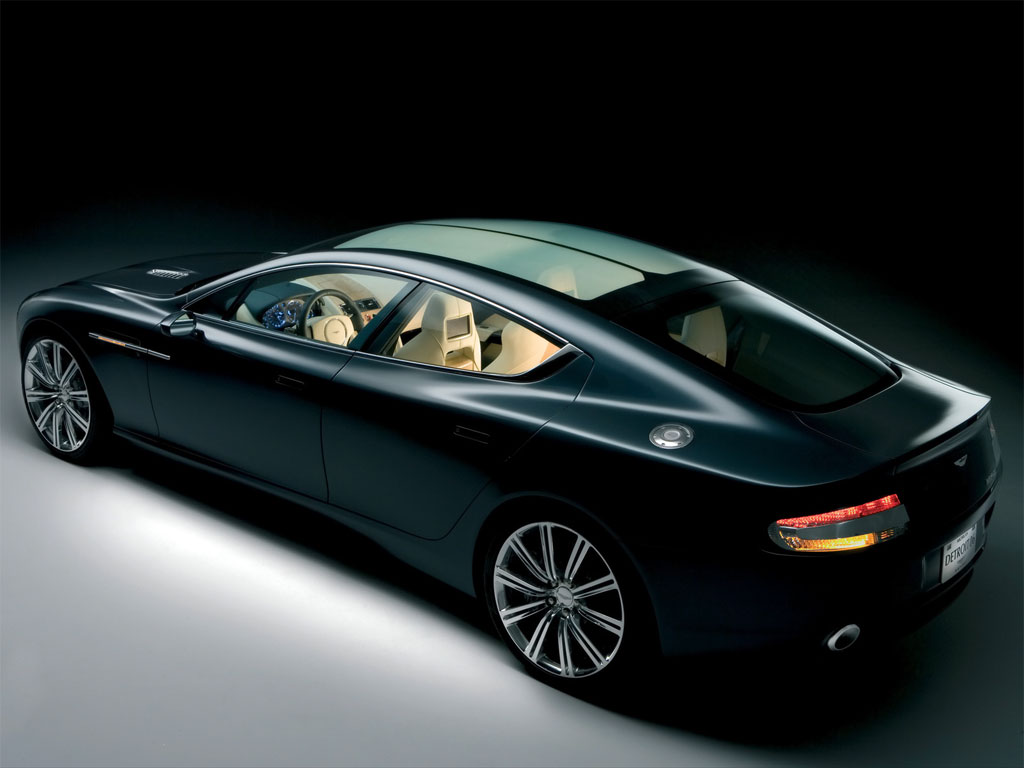
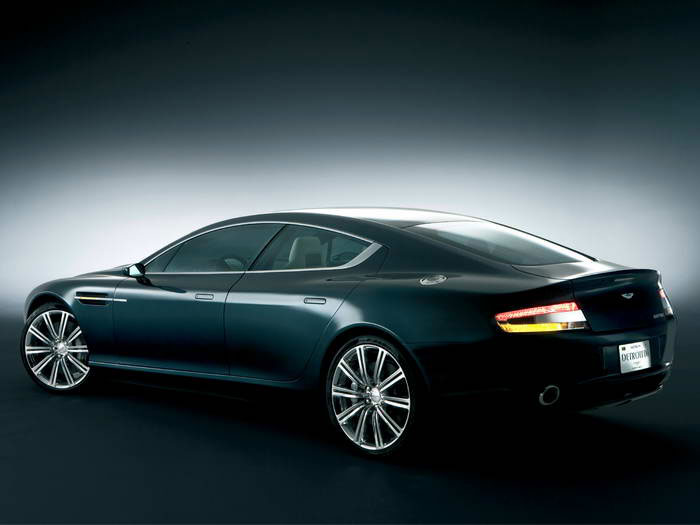
Aston Martin Rapide

Aston Martin RapideAston Martin Rapide

Aston Martin RapideAston Martin Rapide

Aston Martin RapideAston Martin Rapide

Aiding the practicalities of everyday use, the luggage compartment features a movable bulkhead to permit access from the rear cabin while the rear seats fold flat at the touch of a button to create a flat loading space increasing the luggage compartment from 301 litres to 750 litres. Comfort and support is supplied in the form of two hand trimmed individual seats and a personal face-level heating and air conditioning system. Aston Martin Rapide's rear environment has been intelligently packaged to create a space where passengers feel a part of the driving experience with clear views to the front and sides. A 301 litre luggage compartment affords generous space for belongings for all four passengers whether they be sports bags or indeed, sets of skis, creating an Aston Martin which can be enjoyed on any occasion, anytime, anywhere.

As the marque's first production four-door sports car, Aston Martin Rapide encapsulates core values of Power, Beauty and Soul; four 'swan wing' doors provide access to cosseting sports seats both front and rear bestowing occupants with ample accommodation. The elegant Aston Martin Rapide, functional yet luxurious, provides space for up to four adults combined with an engaging driving experience synonymous with all Aston Martins. Aston Martin Rapide, one of the most eagerly awaited cars of 2009, was unveiled at the 63rd Frankfurt Motorshow.

Audi A1 e-tron Concept

Audi A1 e-tron Concept

Audi A1 e-tron Concept

Audi A1 e-tron Concept

Audi A1 e-tron Concept

Audi A1 e-tron Concept

The new e-tron model series from Audi will gain another new member at the 2010 Geneva Motor Show: The Audi A1 e-tron Concept is a Mega City Vehicle (MCV) with an innovative drive technology. It comes equipped with a powerful electric motor for zero-emission driving in the city. There is also an internal combustion engine on board that recharges the battery in exceptional circumstances.

The technology of the Audi A1 e-tron

The e-tron model family from Audi is just a few months old, but it already has a number of members, for each of which Audi has chosen a different drive technology. The first e-tron, which debuted at the 2009 IAA in Frankfurt/Main, is a near-series high-performance sports car with electric motors for all four wheels. The study shown at the Detroit Motor Show in 2010 is a lightweight, compact two-seater with two electric motors on the rear axle.

Audi A5 Sportback

Audi A5 Sportback

Audi A5 Sportback

Audi A5 Sportback

Audi A5 Sportback

Audi A5 Sportback

Audi is presenting a new vehicle concept - the Audi A5 Sportback. The five-door model with the long, flowing rear end unites the best of various vehicle genres: the emotion and elegance of a coupe, the comfort of a sedan and the practicality of a station wagon. The Sportback joins the Audi A5 Coupé and Cabriolet as the third member of the Audi A5 model family.

The Audi A5 Sportback will be rolling into Audi dealerships in September 2009 featuring an emotion-packed design, high everyday practicality, a sporty character and engines that are as efficient as they are powerful. Sales have already begun, with prices starting at 33,650 euros. A further, specially-priced model to follow in 2010 will make the Audi A5 Sportback the entry-level model in the A5 model series.


Audi TT RS

Audi TT RS

Audi TT RS

Audi TT RS

Audi TT RS


Audi TT RS Audi is once again producing a five-cylinder engine - and a very special one at that. Arriving at dealerships this summer, the Audi TT RS has a turbocharged 2.5-liter engine with direct gasoline injection; it produces 250 kW (340 bhp) and 450 Nm (331.90 lb.-ft.) of torque. The blazing five-cylinder engine enables the Audi TT RS to perform extraordinary feats. In conjunction with quattro permanent all-wheel drive and a high-performance chassis, the engine makes the compact Audi TT RS a top-notch sports car - available as a coupé or roadster.

Audi has resumed using this recipe. Designed from scratch, the five-cylinder engine combines a turbocharger with FSI direct gasoline injection to elevate the Audi TT RS to a high-performance sports car. The TFSI delivers 250 kW (340 bhp) from a displacement of 2,480 cc (151.34 cu in): a specific output of 100.8 kW (137.1 bhp) per liter.

Audi TT RS Roadster (2010)

Audi TT RS Roadster (2010)

Audi is once again producing a five-cylinder engine - and a very special one at that. Arriving at dealerships this summer, the Audi TT RS has a turbocharged 2.5-liter engine with direct gasoline injection; it produces 250 kW (340 bhp) and 450 Nm (331.90 lb.-ft.) of torque. The blazing five-cylinder engine enables the Audi TT RS to perform extraordinary feats. In conjunction with quattro permanent all-wheel drive and a high-performance chassis, the engine makes the compact Audi TT RS a top-notch sports car - available as a coupé or roadster.

Sporty five-cylinder gasoline engines have a long legacy at Audi. The most famous is arguably the turbocharged 2.1-liter engine in the Audi quattro. The first version, which was launched in 1980, offered an impressive 147 kW (200 bhp). And the Audi Sport quattro from 1984, directly inspired by motorsport, delivered a whopping 225 kW (306 bhp). For 25 years, turbochargers and quattro have been a dynamic formula for success.

Audi has resumed using this recipe. Designed from scratch, the five-cylinder engine combines a turbocharger with FSI direct gasoline injection to elevate the Audi TT RS to a high-performance sports car. The TFSI delivers 250 kW (340 bhp) from a displacement of 2,480 cc (151.34 cu in): a specific output of 100.8 kW (137.1 bhp) per liter.